The Mitsubishi Pajero
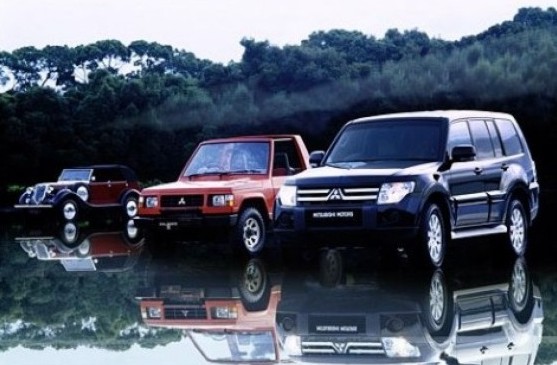
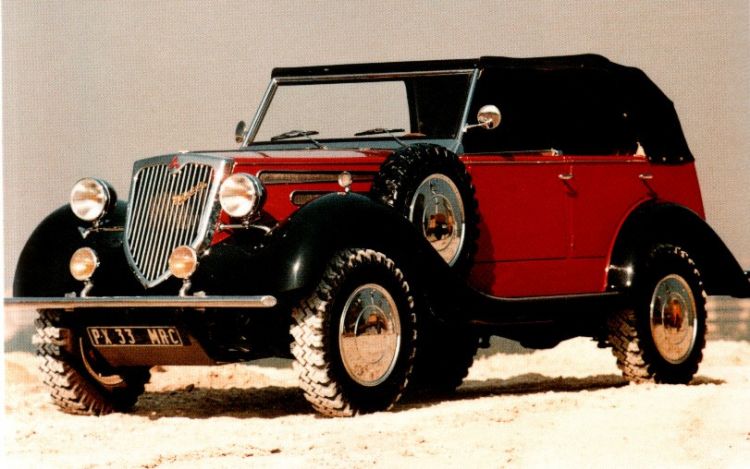
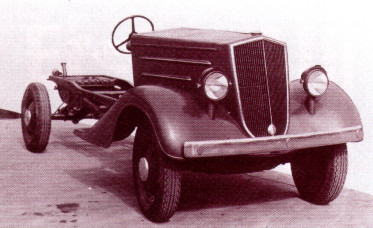
When the ancestor of the Mitsubishi Pajero was first presented to astonished experts at the 1979 Tokyo Motor Show, it was hailed as the company's first off-road vehicle. But that wasn't entirely true. 45 years before that momentous motor show in Tokyo, Mitsubishi could already boast of marketing the first series-produced four-wheel-drive passenger car and, at the same time, Japan's first off-roader — one that, on top of that, could call a diesel engine its own. This legendary vehicle, of which only half an original example exists on planet Earth today, goes by the name PX-33.
But the car fell into oblivion, and the four-wheel-drive passenger car vanished from the scene as quickly as it had appeared. It was not until Audi, with its Quattros, made this kind of drivetrain technology socially acceptable again. Yet in its day the PX-33 enjoyed the most distinguished admiration. The company chronicles hand down the story of Prince Tsunenori Kaya, through whose veins flowed not only blue blood but also the stuff that fuels engines. Stories reached the young nobleman's ears of a car that could be thrown off course neither by mud nor by steep climbs, because it distributed its driving power to all four wheels. The requested demonstration was promptly arranged, and so it came about that the technology-loving blue-blood experienced up close how Japan's first four-wheel-drive passenger car, spraying wildly in all directions, fought its way up a muddy hill. The prince, who had deemed his parade uniform the appropriate attire for this occasion, is said to have looked after the demonstration like a rally fan in the front row — instead of gleaming white, matte brown.
But the first four-wheel-drive passenger car was not quite as civilian as it appeared. In 1932 the Japanese occupied Manchuria and, in 1933, left the League of Nations over disputes about this incident. A year later Japan terminated the Washington Naval Treaty, which limited the size of the Japanese naval forces. During that time Japan occupied part of northern China, concluded the Anti-Comintern Pact with Germany, and, moreover, let the first signs of the war against Chiang Kai-shek flare up. It almost goes without saying that the four-wheel-drive sedan was destined to become not a trendsetter but a commander's vehicle.
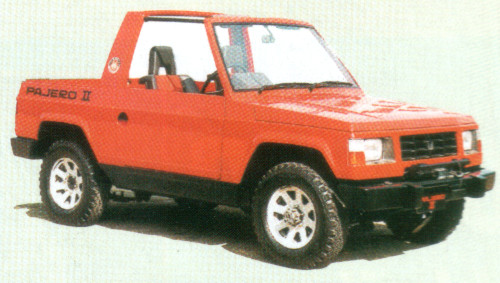
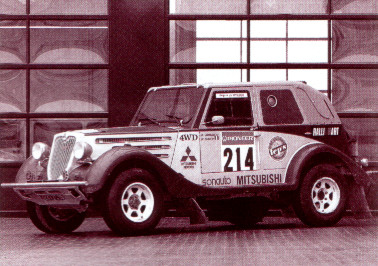
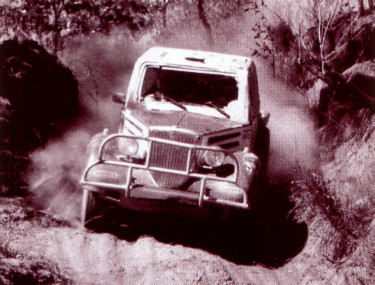
It was in 1987 that the head of the French import company Sonauto S.A. in St. Quen-l’Aumone — Norbert Wagener — became aware of the PX-33 during a company visit in Japan. Since the Pajeros were extremely successfully established on the market at that time and were shown on television every day in desert rallies, Wagener decided to enter a Pajero with a long wheelbase and PX-33 body in the Paris–Dakar Rally. The rally PX had a 2.6-litre turbo engine and developed 275 hp, which made it good for 215 km/h. The entire car, with a Kevlar carbon-fibre body, weighed just 1250 kilograms and could hold 400 litres of fuel in its innards. Wagener offered Mitsubishi Japan the chance to build a small series of 200 units in Japan and, after the success of the rally prototype, was confident that he would be able to realise his plans. The production model was technically unspectacular. It consisted of the underpinnings of the long-wheelbase Pajero and the body of the PX-33 and, with the Pajero's 2.6-litre engine of the time, reached a speed of 140 km/h. The impact of the car was gigantic, but its realisation got lost in some official's drawer over questions of feasibility and financing.
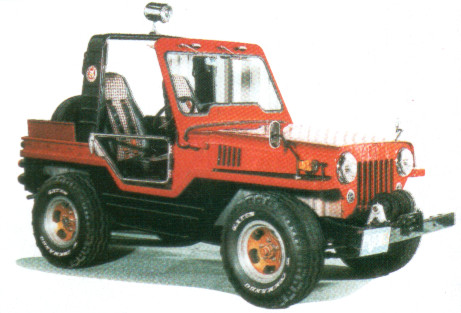
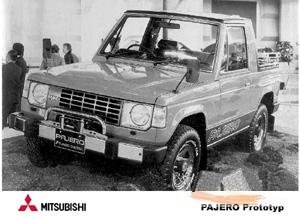
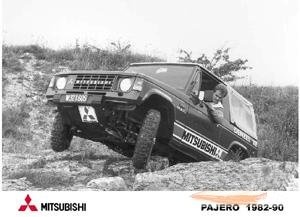
The PX-33 may thus have been dead once and for all, but the Pajero already existed and enjoyed great popularity. Its story begins in 1973, when the Mitsubishi group's first study of a four-wheel-drive off-road vehicle, a licence-built version of an American Jeep, was presented to the press and trade audience at the Tokyo Motor Show. However, another five years passed before the Japanese company bosses gave the go-ahead for series production in 1978. In 1979 the ancestor of the production Pajero was unveiled at the Tokyo Motor Show, and in 1981 the first production models rolled off the line. It was not until 1983 that the first Mitsubishi Pajero L040 rolled off a ship in Europe.
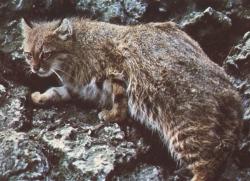
The off-road vehicle we all know by the name Pajero owes its name to a South American wildcat, the wild feline felis pajero. The press release issued by Mitsubishi read as follows: “The felis pajero is a wildcat of short, powerful build, famous for its magnificently patterned coat. It lives in the rugged regions of Patagonia in South America. In the manner of wild cats, felis pajero combines strength and grace into a harmonious whole and prefers rough terrain that other animals avoid. Felis pajero naturally embodies the conquering spirit of the Pajero, the newest model from Mitsubishi.” A true Pajero fan seems to have worked on that press release, for it certainly speaks from the heart of every enthusiast.