Mitsubishi - The Mother of a Legend
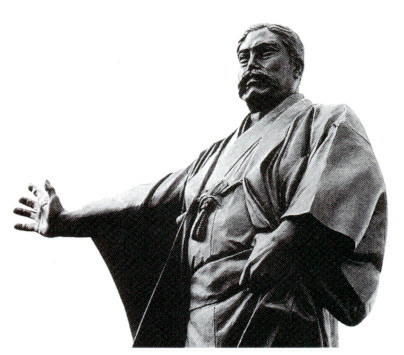
In 1870, a young graduate of the imperial college bought three merchant ships and thereby opened up the paths to global trade relations; his name was Yataro Iwasaki. When he founded his company, he had no inkling of the off-road vehicle that would later take the hearts of off-road drivers by storm. Only 5 years after his first investment, Yataro Iwasaki was the head of a company based in Tokyo that was viewed with favour by the imperial court and awarded government contracts. It was also during these years that the company name Mitsubishi came into being, which translated from Japanese means three diamonds. Today you will find them as the symbol on every motor vehicle of the Mitsubishi group.
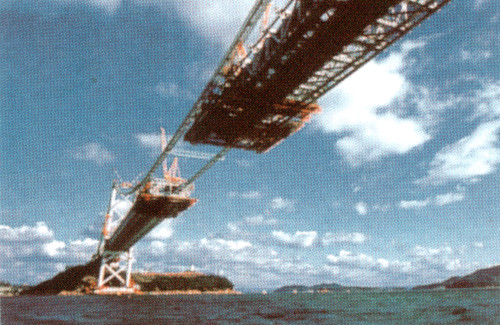
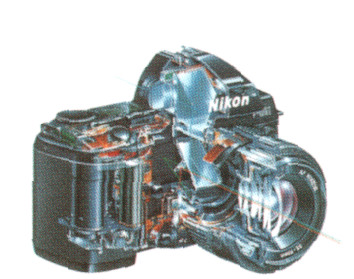
As the company's history went on, its field of activity fanned out further and further from its actual core business, namely trade, and so today the Tokio Marine and Fire Insurance as well as the Mitsubishi Trust and Banking Corporation belong to the Mitsubishi group. The generational change at the top of the company cleared the way for a new outlook, for the son of the company founder, Koyata Iwasaki, was regarded as a modern-thinking, European-influenced man who had studied at the famous Cambridge University in England. He drove the internationalisation of the Mitsubishi group further forward, and so today companies such as the Mitsubishi Oil Company or Mitsubishi Heavy Industries — an armaments firm whose machines milled the Eurotunnel between England and France through the seabed — but also the camera manufacturer Nippon Kogaku K.K., better known by the name Nikon, can be found in Mitsubishi's portfolio. Mitsubishi's range of activities covers every conceivable area of industry, from bridge and road construction through microelectronics to shipyards and space-shuttle yards. In the field of microelectronics, Mitsubishi is among the ten largest companies worldwide, the shipbuilding division is planning the construction of the fastest transport ship at 180 km/h, and in 1994 the first rocket developed under Mitsubishi's direction, the H2, set off on its flight into space.
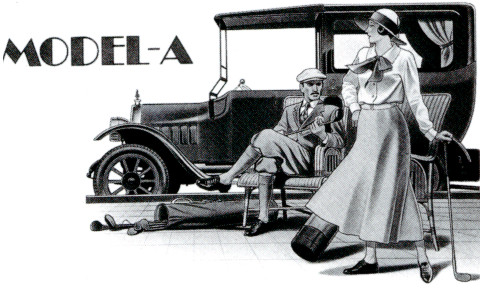
It was not until the penultimate year of the First World War, 47 years after the company's founding, that Mitsubishi entered automobile manufacturing with an exact copy of the Italian Fiat Tipo Zero. In Japan this car was offered under the name Model A. In 1918 the automotive branch of the Mitsubishi group shifted its focus to the commercial vehicle sector — research and development were pushed forward, and so the company can claim a number of successes today, such as the development of the first Japanese diesel engine (1931), or, a year later, the production of a 100 hp petrol engine that made the B46 the fastest bus in Nippon.
In 1934 the first diesel-powered four-wheel-drive vehicle, the PX-33, made its debut. Japan's involvement in the Second World War forced Mitsubishi, as a high-tech group, to manufacture armoured vehicles and aircraft, and it ended with the complete destruction of the production facilities at the end of the war. Even today, with Mitsubishi Heavy Industries, the company has a firm foothold in the armaments sector. The subsidiary ranks among the twenty largest arms suppliers in the world. In 1950 Mitsubishi's automotive branch reported its first successes again with the development of the Fuso R1, Japan's first front-wheel-drive bus, and, a year later, the T31, which with a payload of 4 tonnes was Japan's heaviest truck.
It was not until 1959 that Mitsubishi returned to its old strength and devoted itself once more to the passenger car. That year saw the first truck with a tilting cab and a four-seat small car with an air-cooled 21 hp half-litre engine. Three years later Mitsubishi took up arms and launched the Colt, a small car that even today remains a fixture in the small-car segment. The first Mitsubishis did not appear in Germany until the founding of MMC, the Mitsubishi Motor Corporation Deutschland GmbH, in 1977, and they have been multiplying rapidly since 1982. In that year MMC presented a veritable flood of new models, among them the L300 four-wheel-drive van, the compact Lancer F, the Tredia as a mid-size car and the Cordia as a sports coupé. In addition, the off-road vehicle christened Pajero also appeared for the first time — the car that was to take Germany by storm.
In 1989 sales reached half a million, and six years later the counter leapt past the magic mark of one million Mitsubishi passenger cars sold.